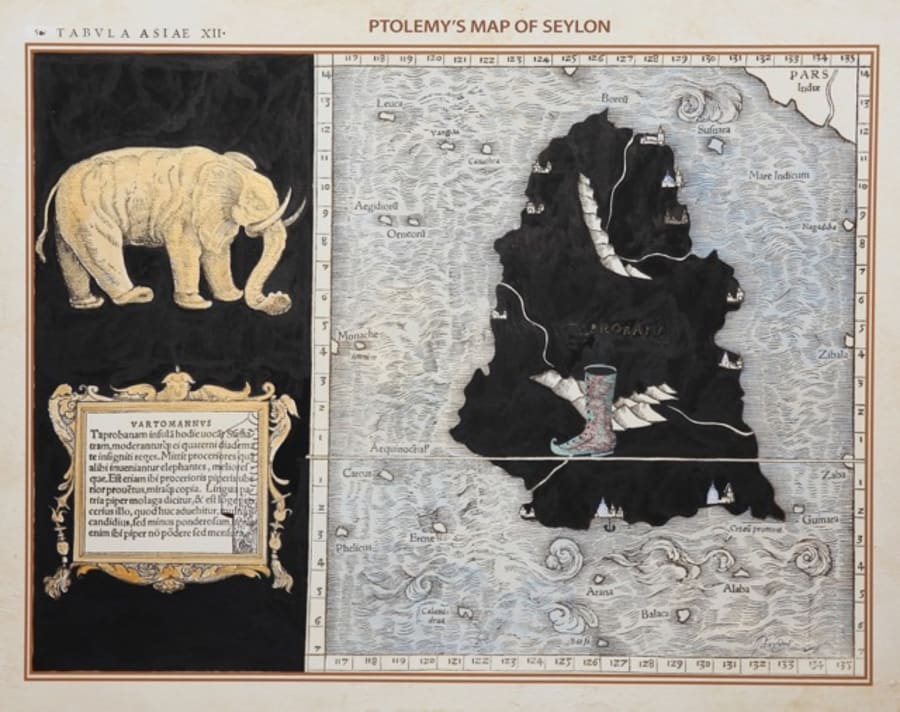
Sri Lanka, the paradise destination, is an amalgamation of multiple layers of passages that have made the island country subject to chosen or imposed identities, which, under the contemporary narratives of cosmopolitanism are intentionally hidden or buried under its turbulent past. Due to its strategic and somewhat isolated location in the Arabian Sea, 'Lanka' and its history have imprints of influences from India, though this history is not always alluded to (Meyer), as well as the Arabs, Portuguese, Dutch and the British, all of whom stopped at her shores during their North South or West East expeditions. These maritime routes resulted in the exploitation of Lanka's natural resources and its natives, and initiated a pattern of immigration and emigration that is similar to the current global movements.
These external interferences have created conflicts that are now deeply embedded in its history, the scars of which often surface in contemporary times: scars, which tell the story of the great losses to the island, most importantly, its identity. The emergence of rigid identities, be it religious or regional, complete with its share of accompanying centuries of imperial rule, friction and violence have pushed Sri Lanka to create an international identity in its newly found freedom.
It is also perhaps the case that these scars of colonialism and religious conflicts, demand that Sri Lanka re look at herself, in this case, through the eyes of a cartographer who questions his own traditional as well as academic upbringing in a politically charged nation that, from his artistic vantage point, fails to address the venerated title –'Sri' – the country is known for.